
Market Education · Section 02
Trading Context
The conditions around a trade: how the session opened, whether it is trending or ranging, where the levels are, and whether a stock is moving with the market or against it.
21 lessons · 6 topics
- Education
- Market Education
- Trading Context
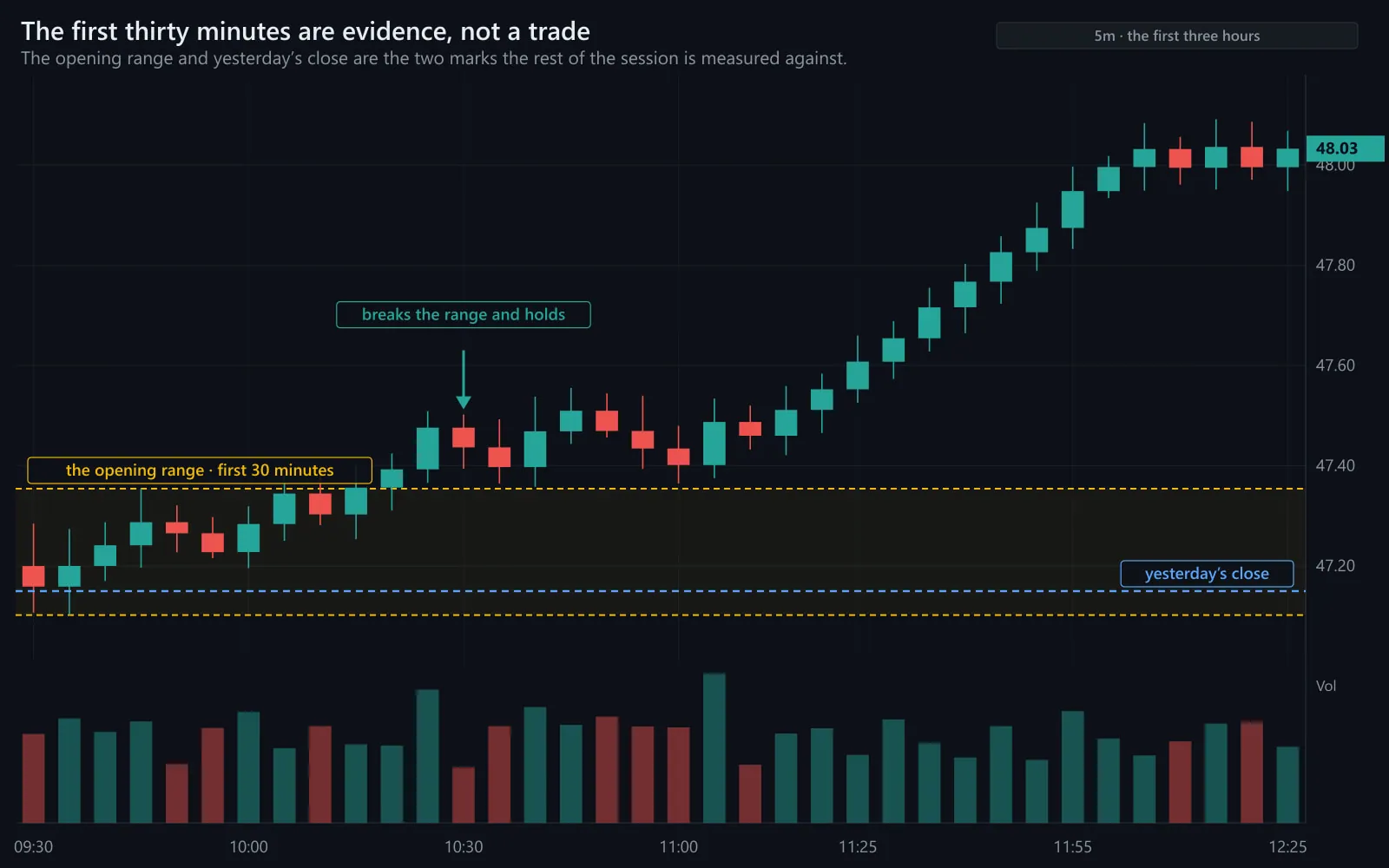 Trading ContextContextOpening ConditionsThe first thirty minutes carry information about the rest of the day. Here is how to read them.
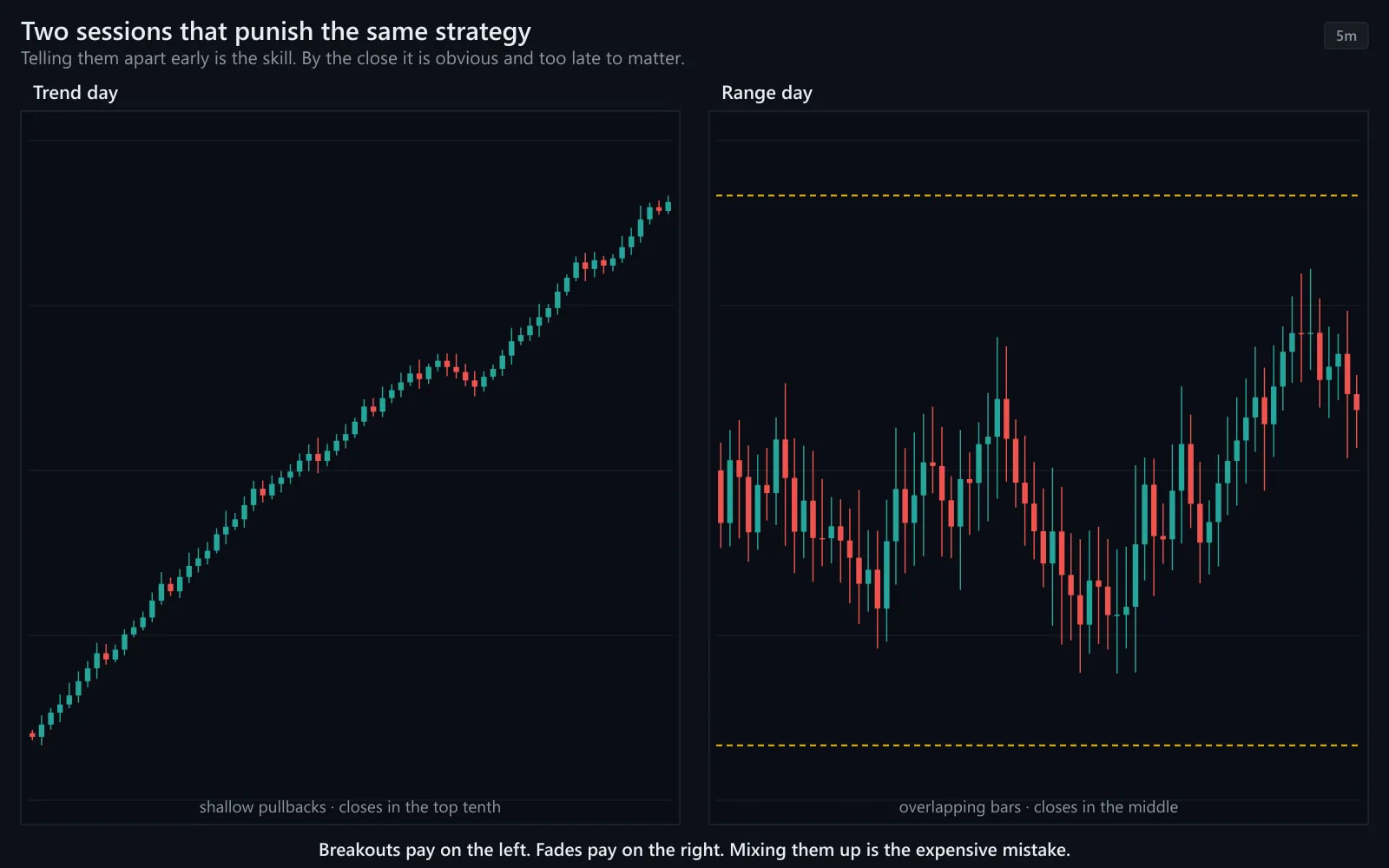 Trading ContextContextTrend Day vs Range DayTwo kinds of session, two different approaches. Telling them apart early is the skill.
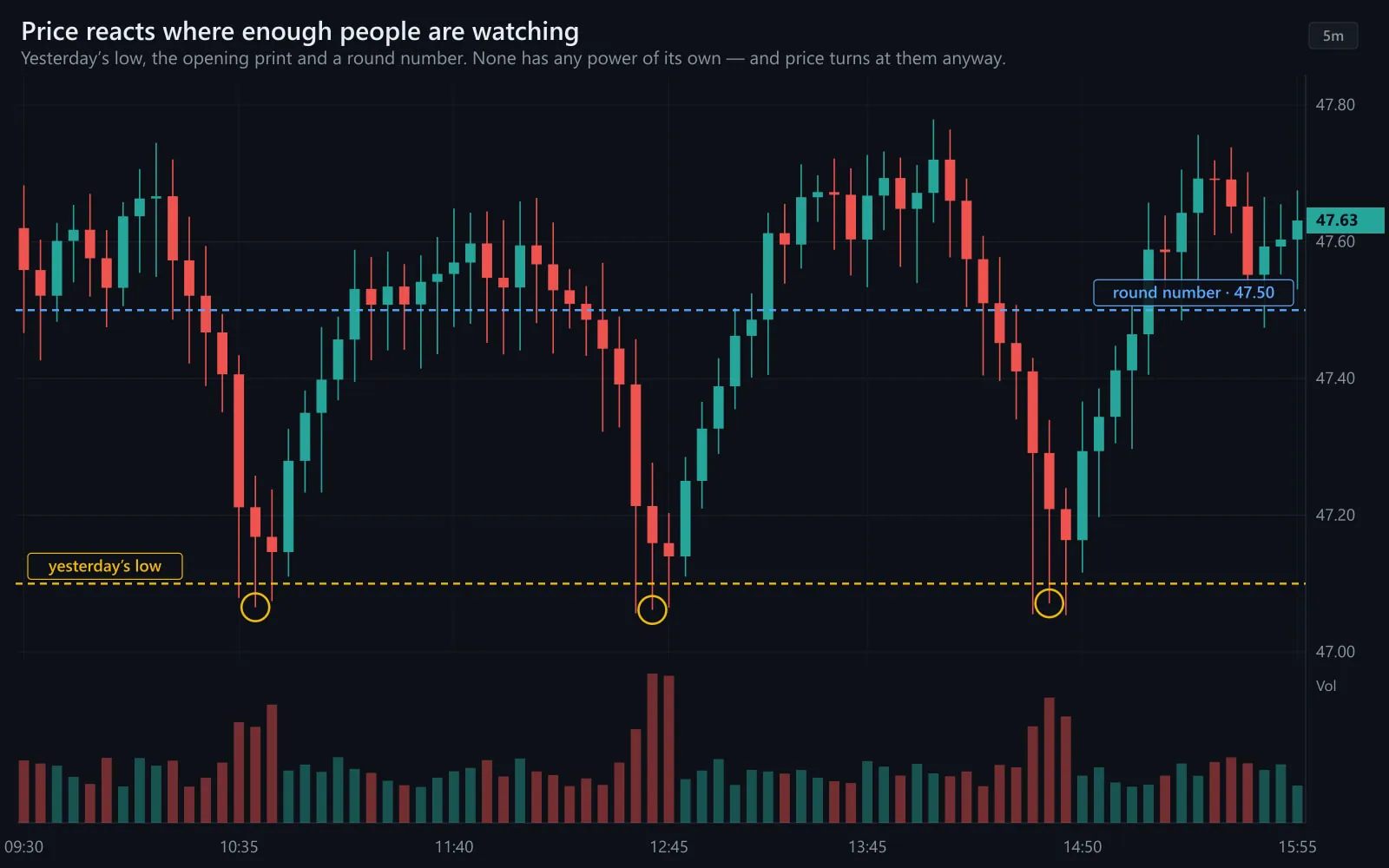 Trading ContextContextKey Market LevelsPrior highs and lows, the open, VWAP, round numbers — why prices react where they do.
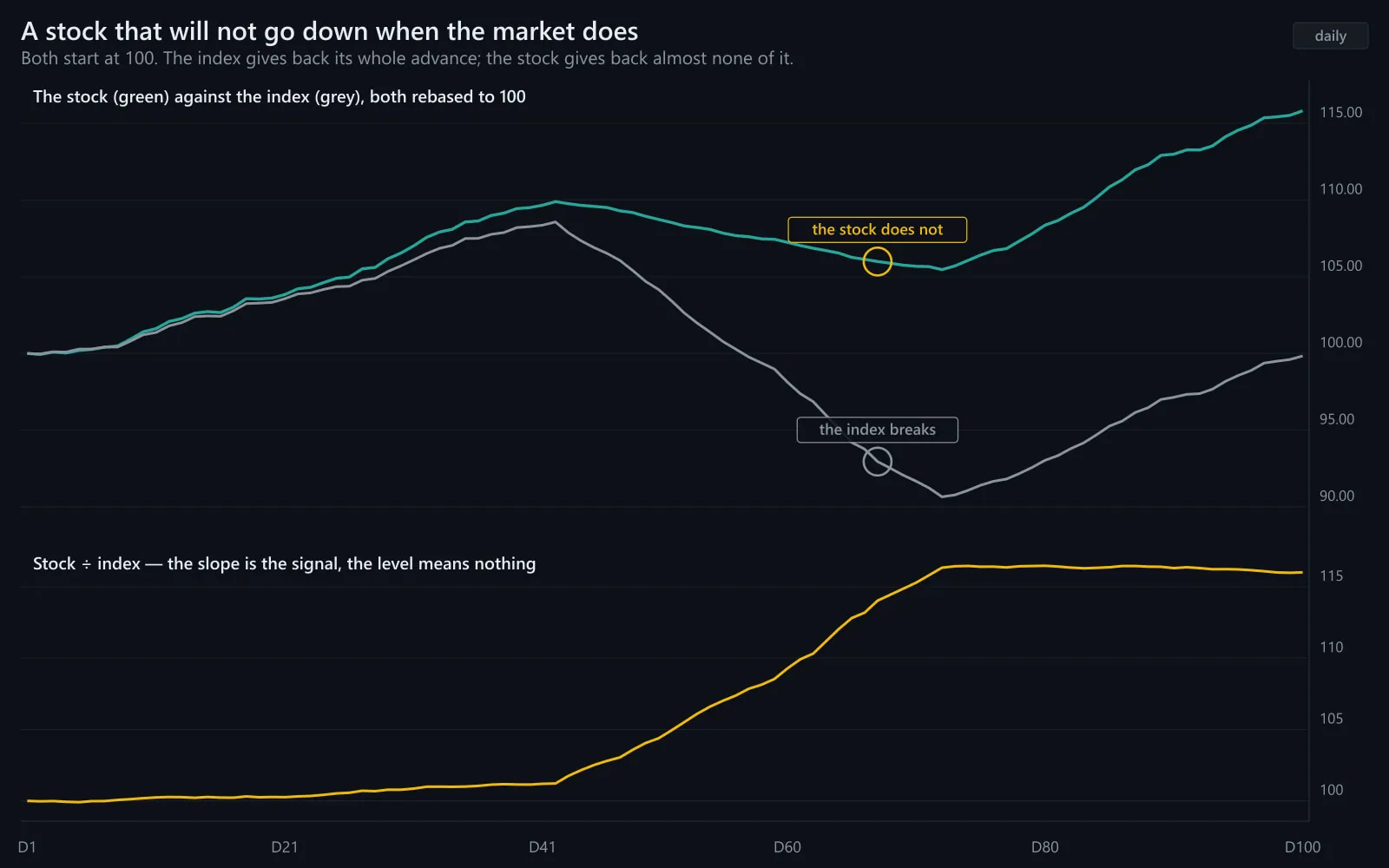 Trading ContextContextRelative Strength / WeaknessA stock that holds while the market falls is telling you something. So is one that can't rally when it rises.
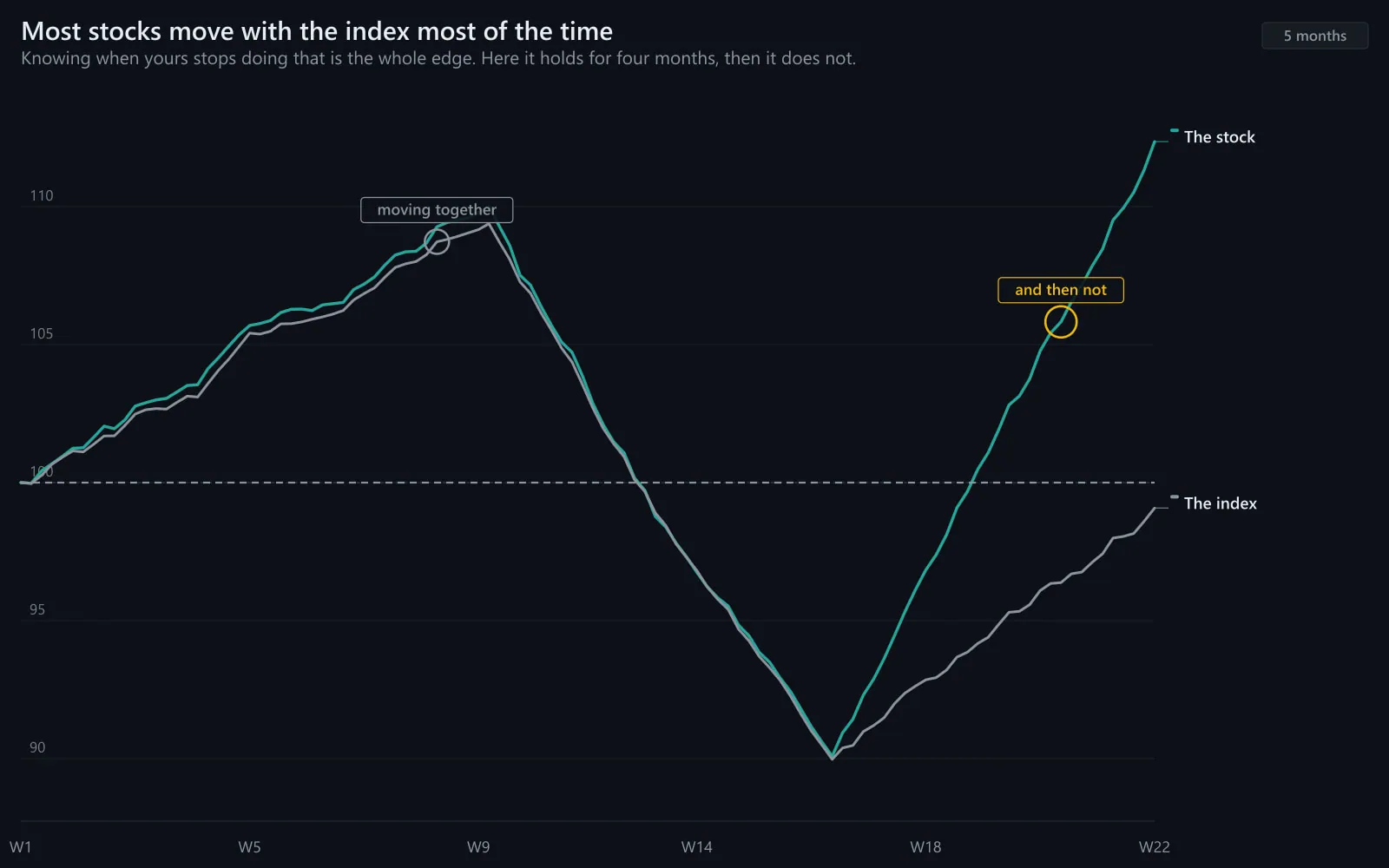 Trading ContextContextCorrelation with QQQ / SPYMost stocks move with the index most of the time. Knowing when yours doesn't is the information.
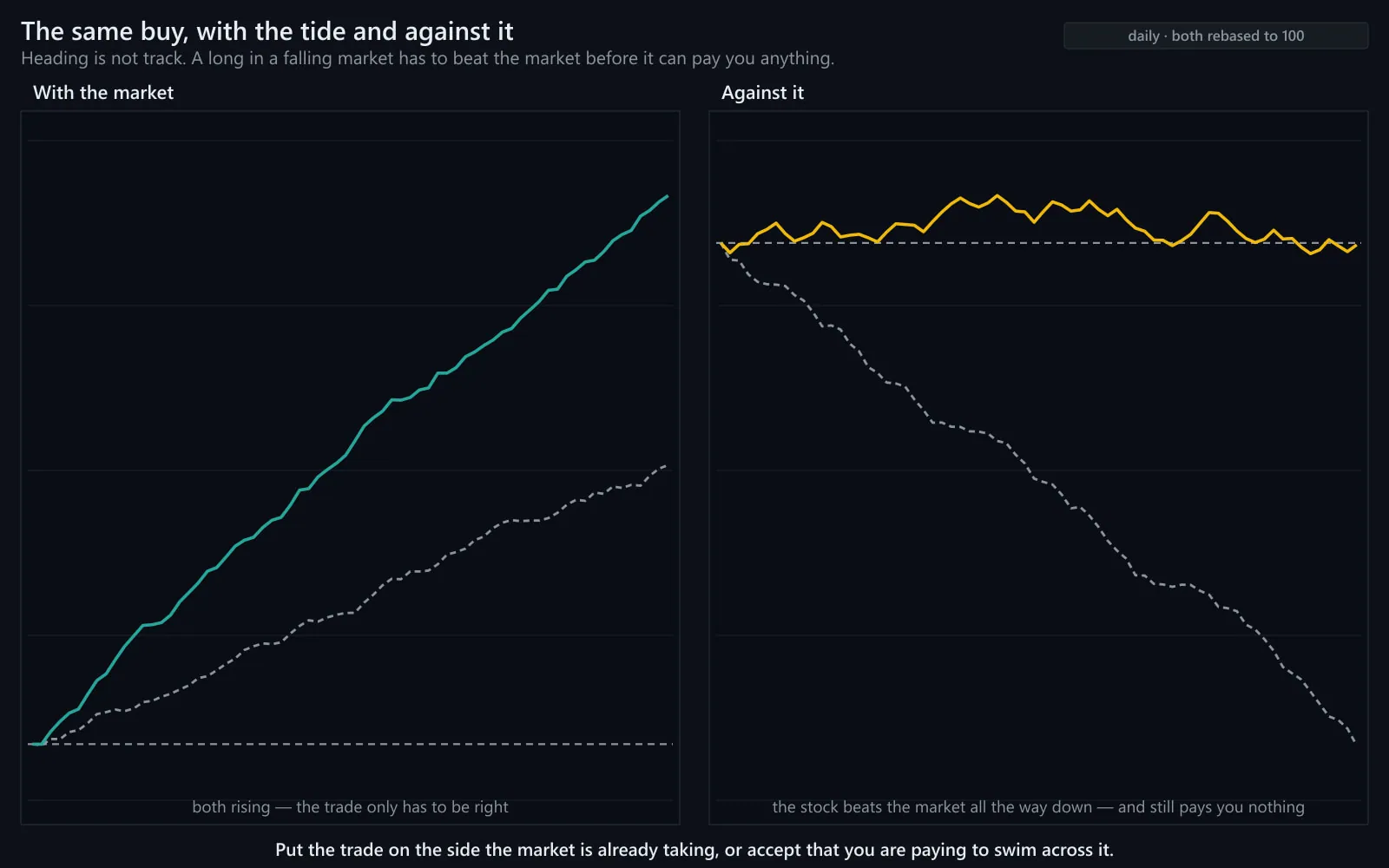 Trading ContextContextMoving With or Against the MarketPutting relative strength, correlation and leadership together before you press Buy.
Series · 9 lessons
Inside Trend Day vs Range Day
Two kinds of session, two different approaches. Telling them apart early is the skill.
Read the overview ›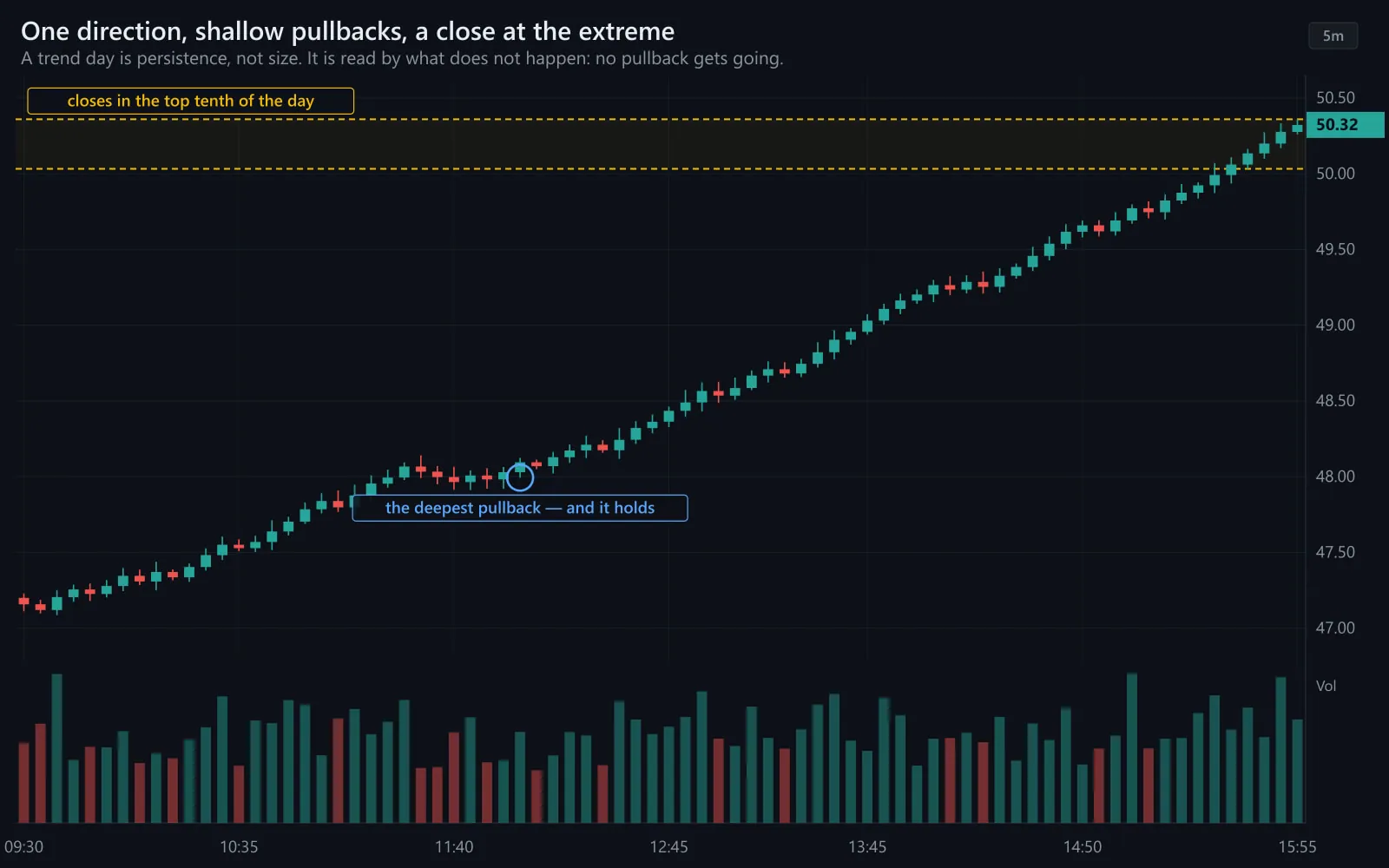 Trend Day vs Range DayLesson 2What a Trend Day Looks LikeOne direction, shallow pullbacks, a close near the extreme.
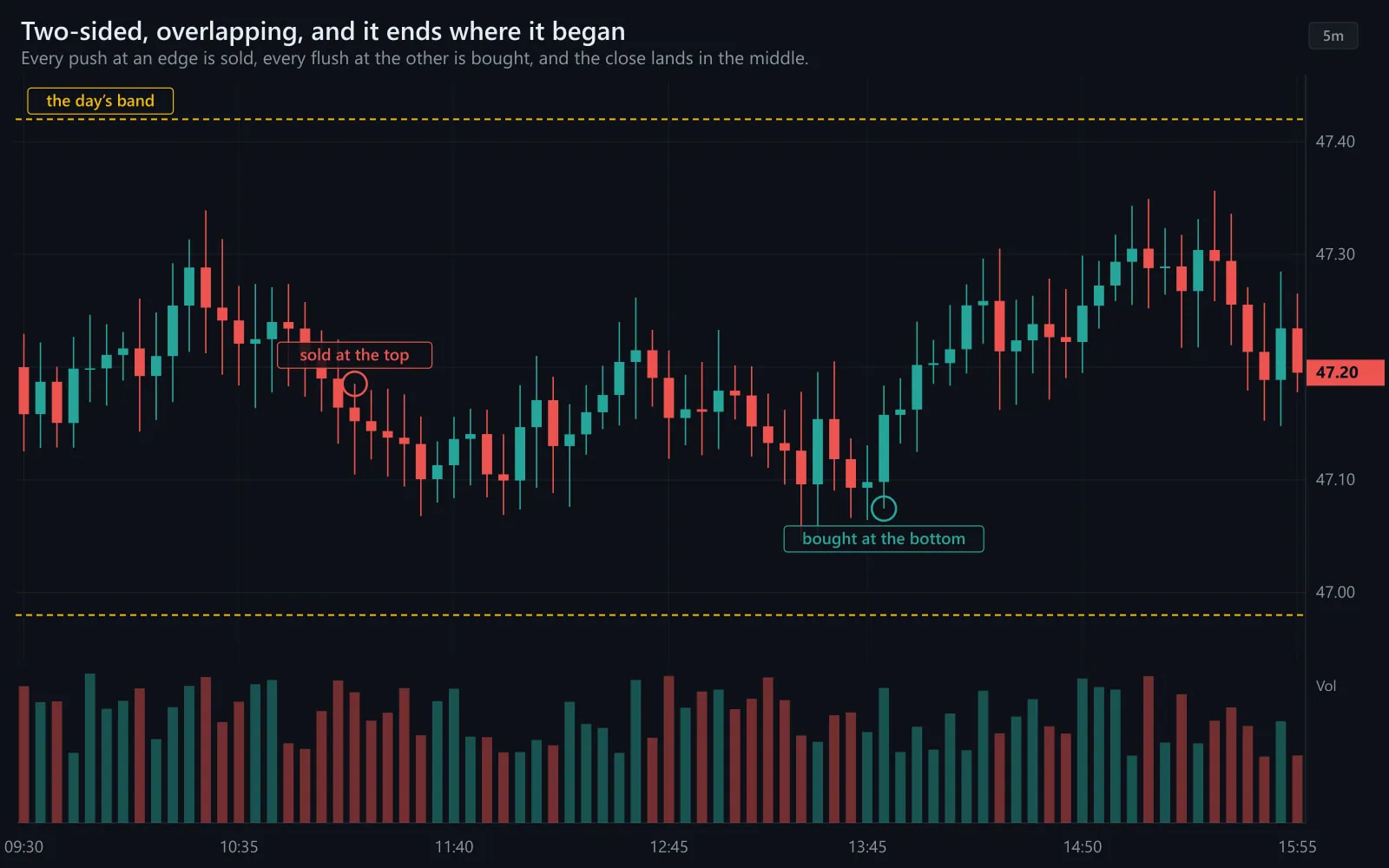 Trend Day vs Range DayLesson 3What a Range Day Looks LikeTwo-sided, overlapping bars, a close near the middle.
 Trend Day vs Range DayLesson 4Opening CluesGap, first-hour range, and the first test of the open.
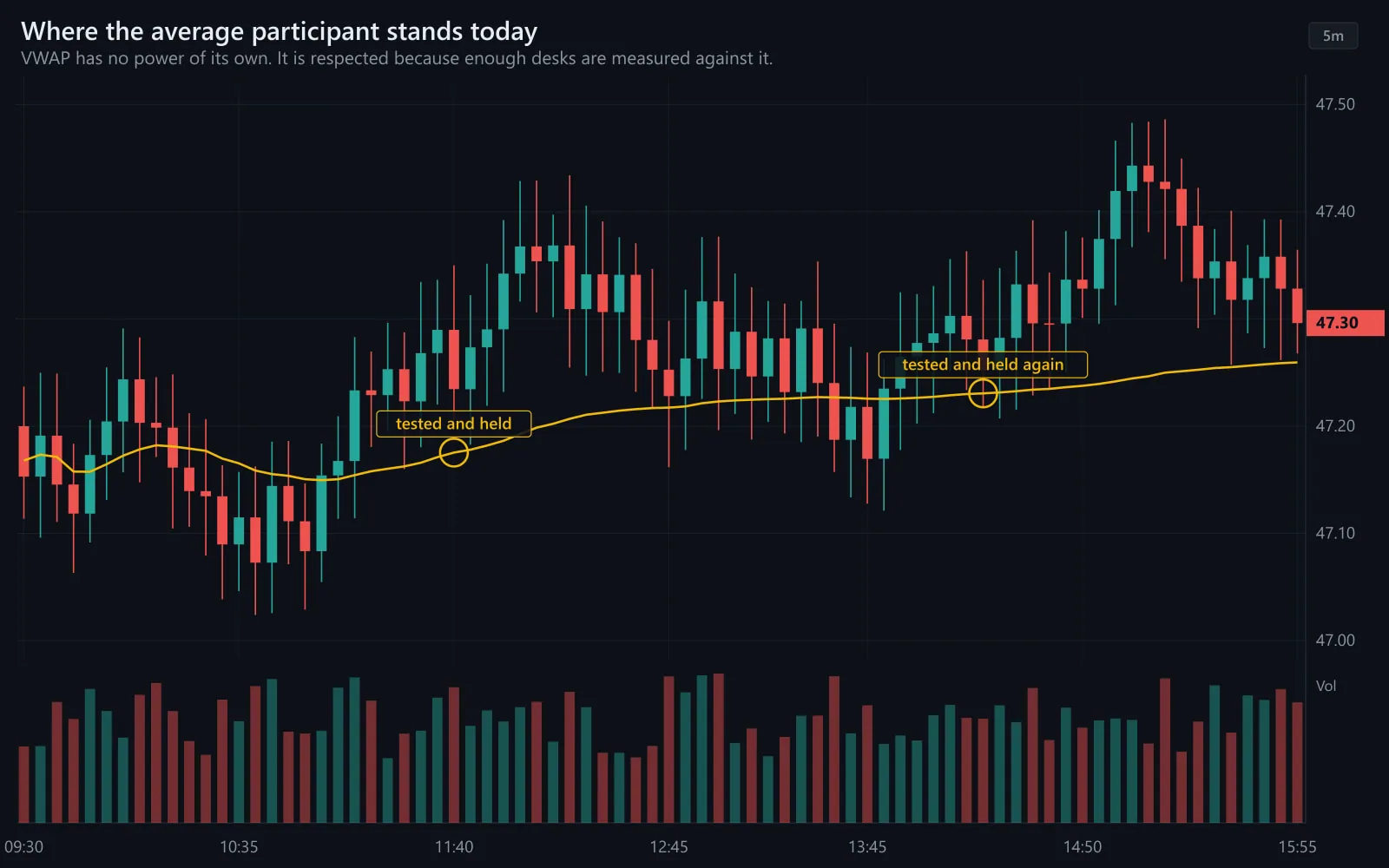 Trend Day vs Range DayLesson 5VWAP BehaviourWhere the average participant stands, and how price treats it on each kind of day.
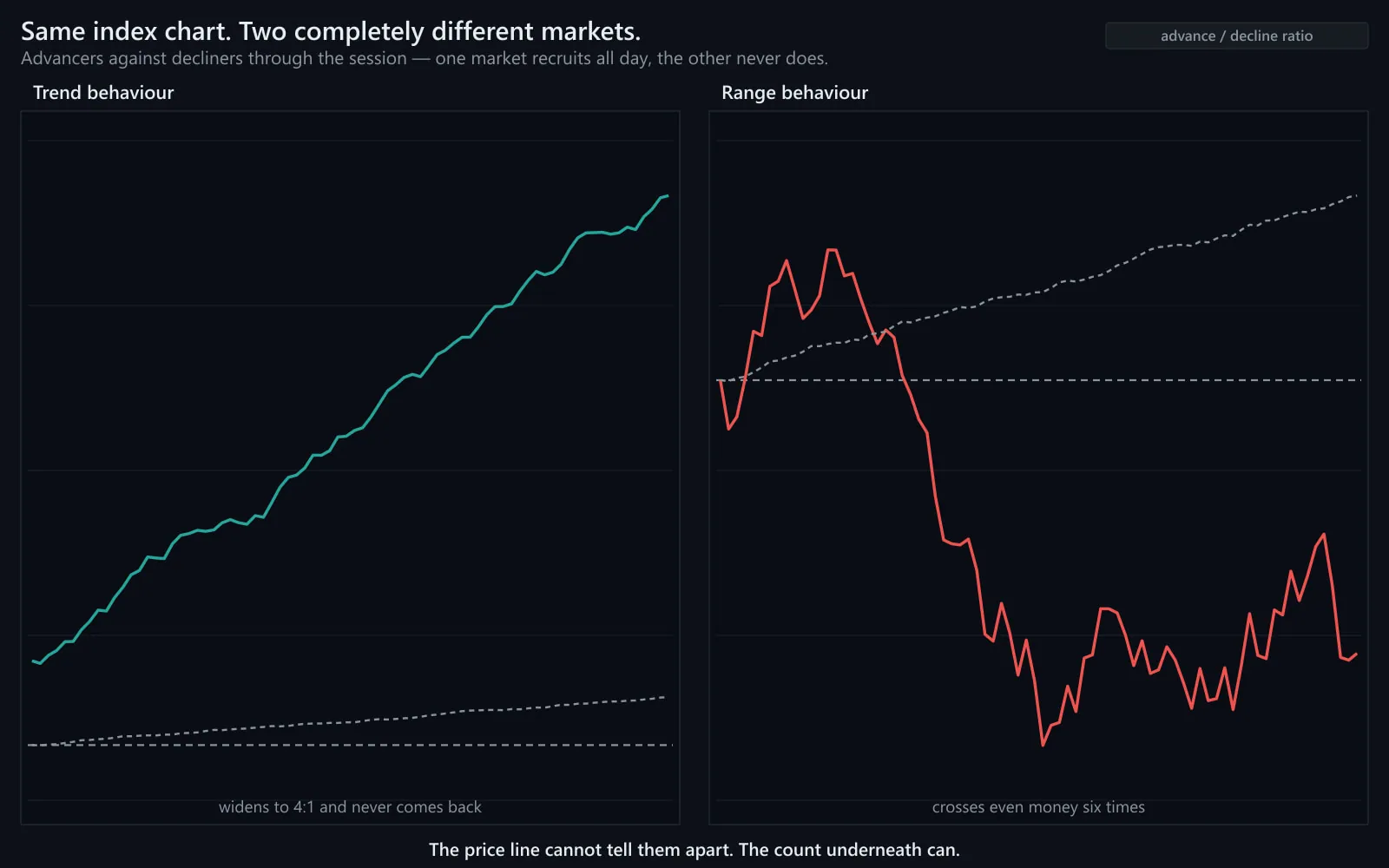 Trend Day vs Range DayLesson 6Breadth BehaviourOne-sided participation versus a coin flip.
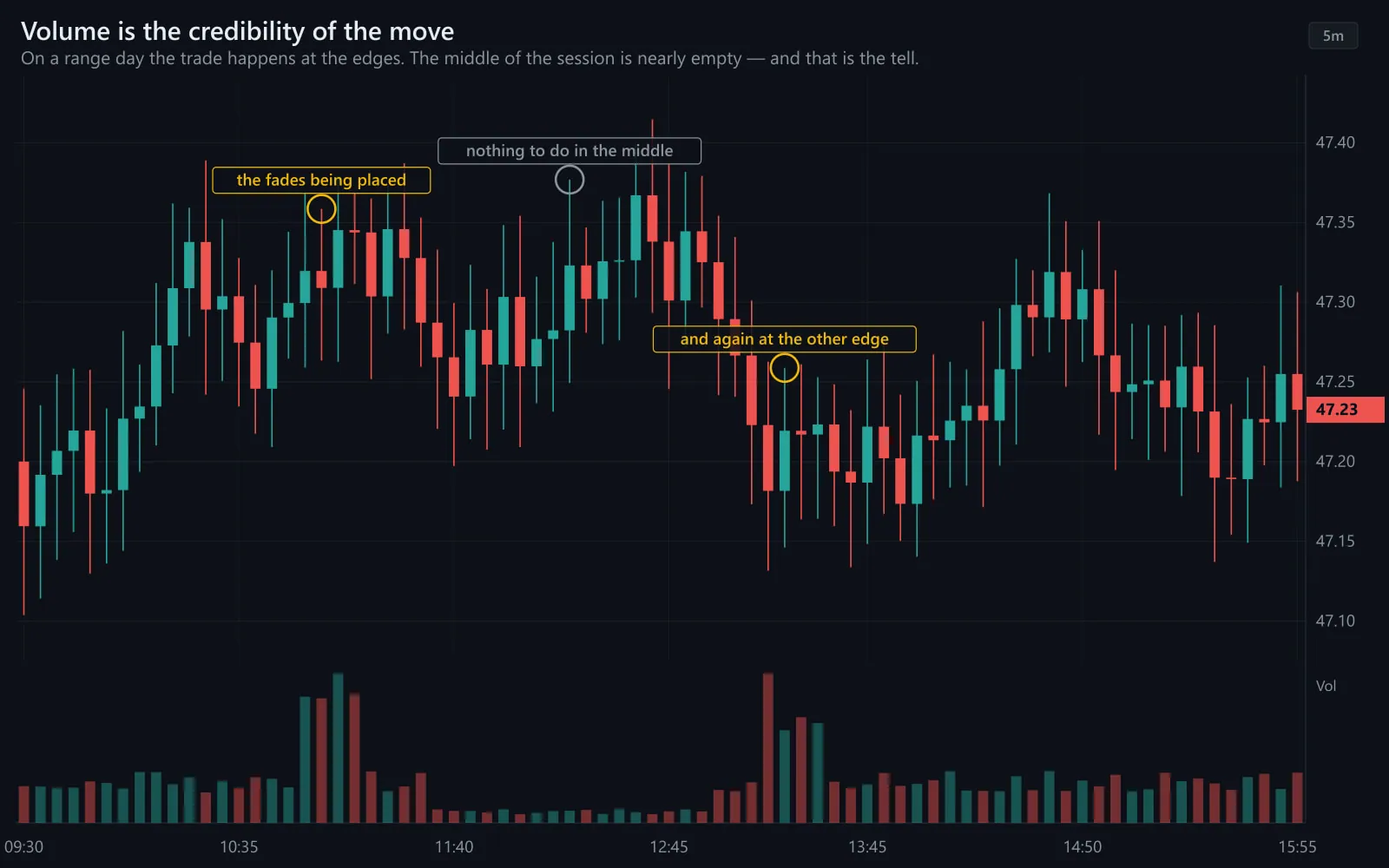 Trend Day vs Range DayLesson 7Volume BehaviourExpanding volume in the direction of the move, or volume that fades at the edges.
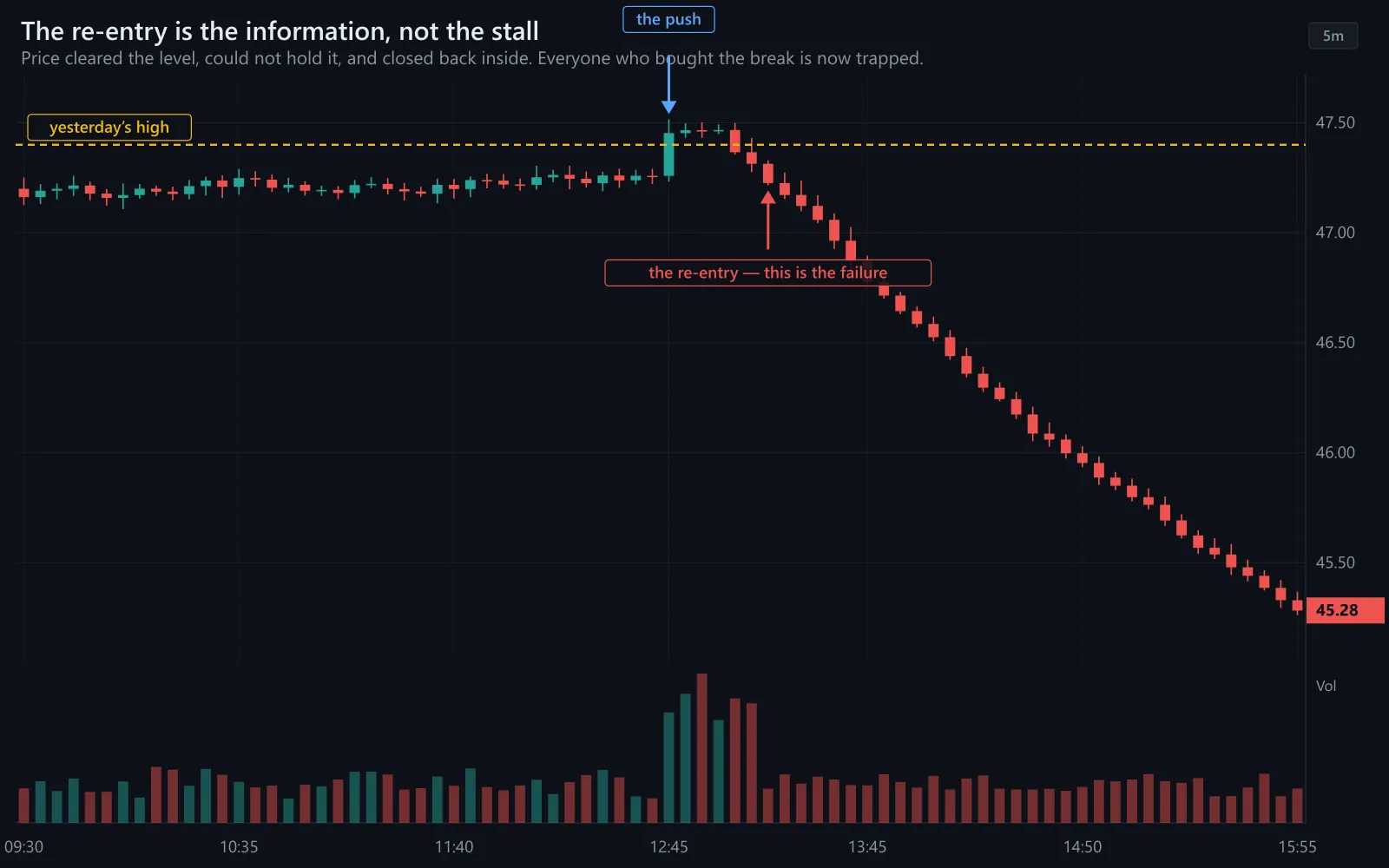 Trend Day vs Range DayLesson 8Failed Breakout BehaviourWhy failed moves are the signature of a range day.
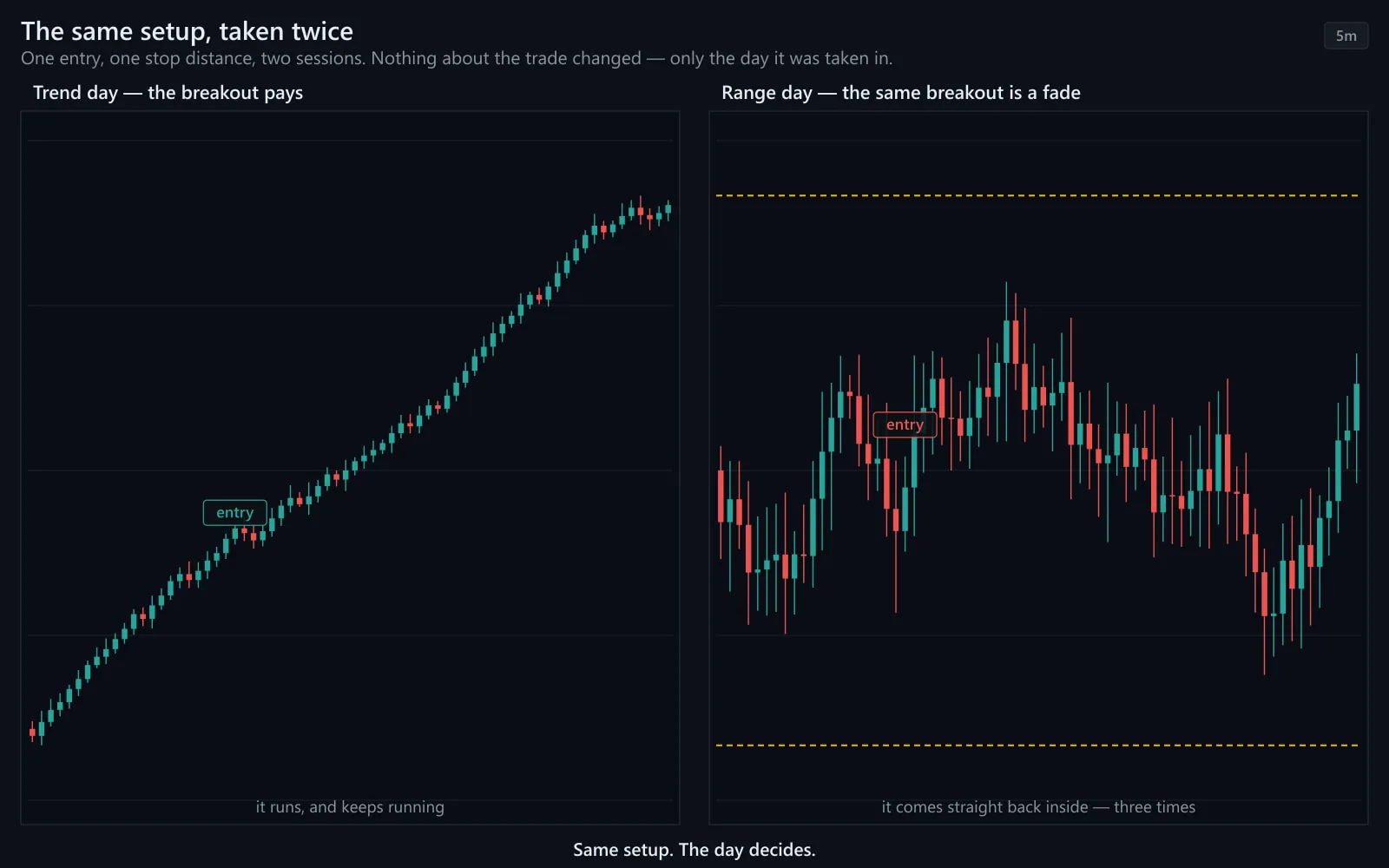 Trend Day vs Range DayLesson 9Why Strategy Changes With ConditionBreakouts studied in a trend, fades in a range — and the cost of mixing them up.
Series · 8 lessons
Inside Relative Strength / Weakness
A stock that holds while the market falls is telling you something. So is one that can't rally when it rises.
Read the overview ›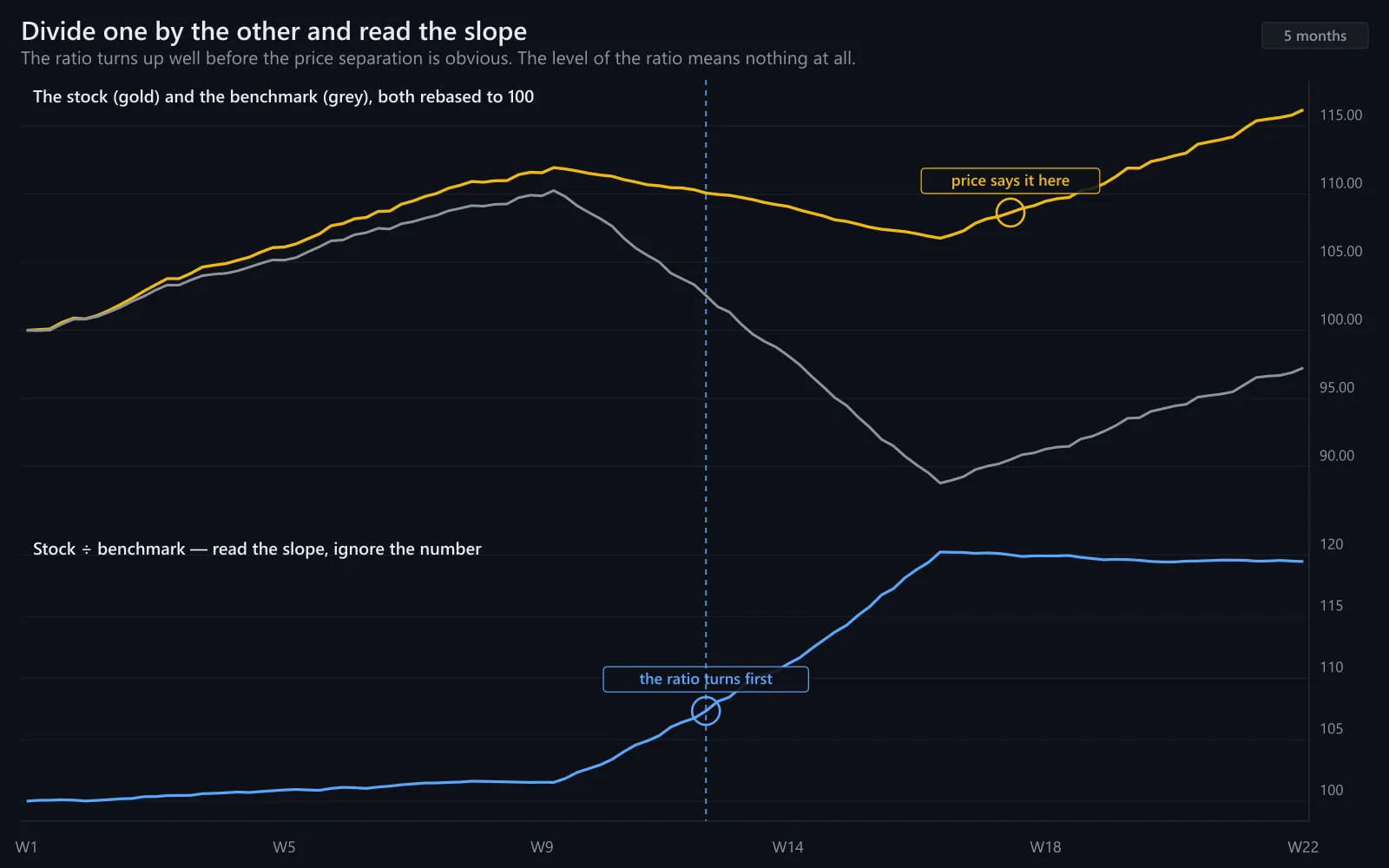 Relative Strength / WeaknessLesson 2Stock vs SPYThe simplest relative-strength comparison and how to run it.
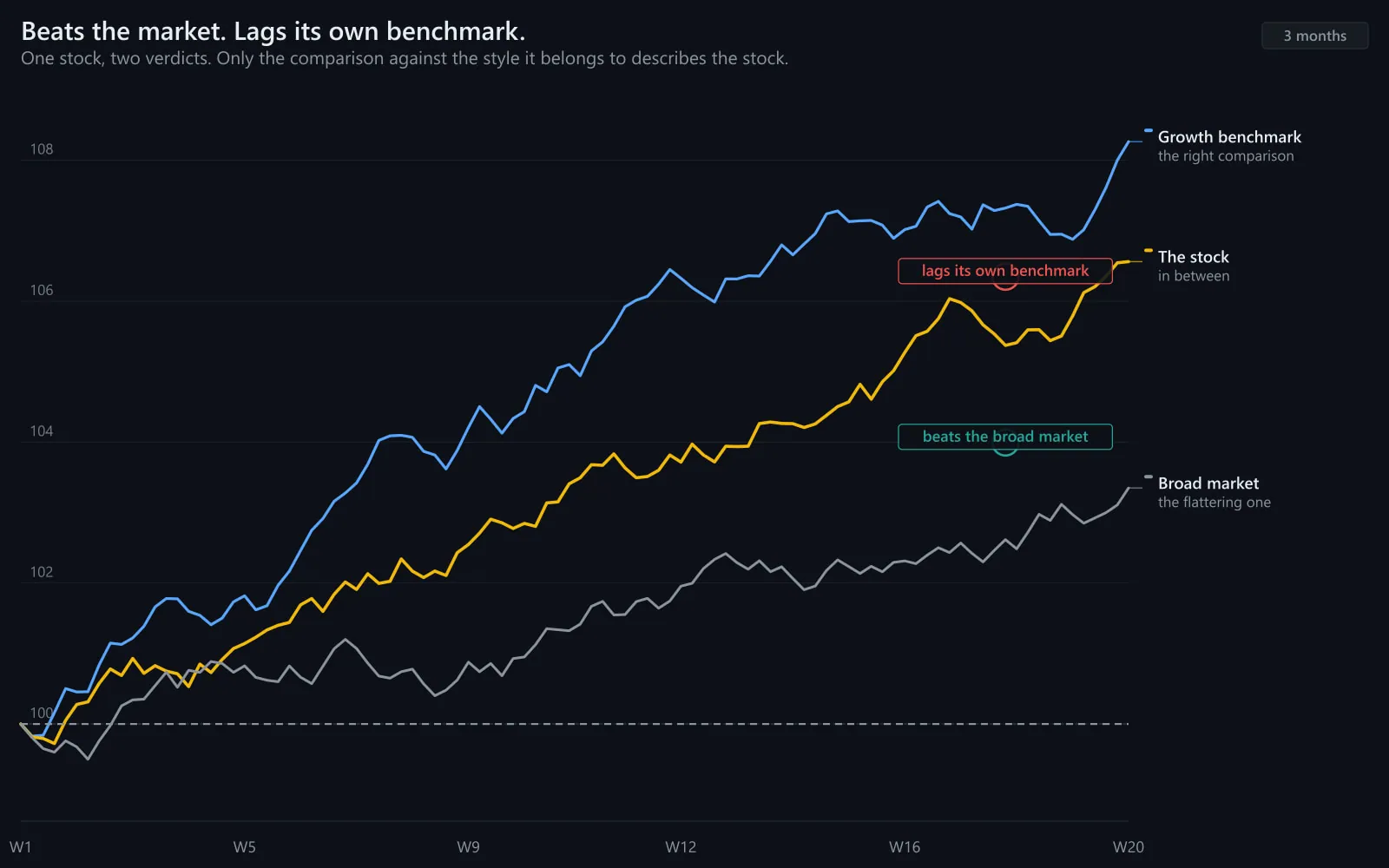 Relative Strength / WeaknessLesson 3Stock vs QQQComparing growth names against the growth benchmark.
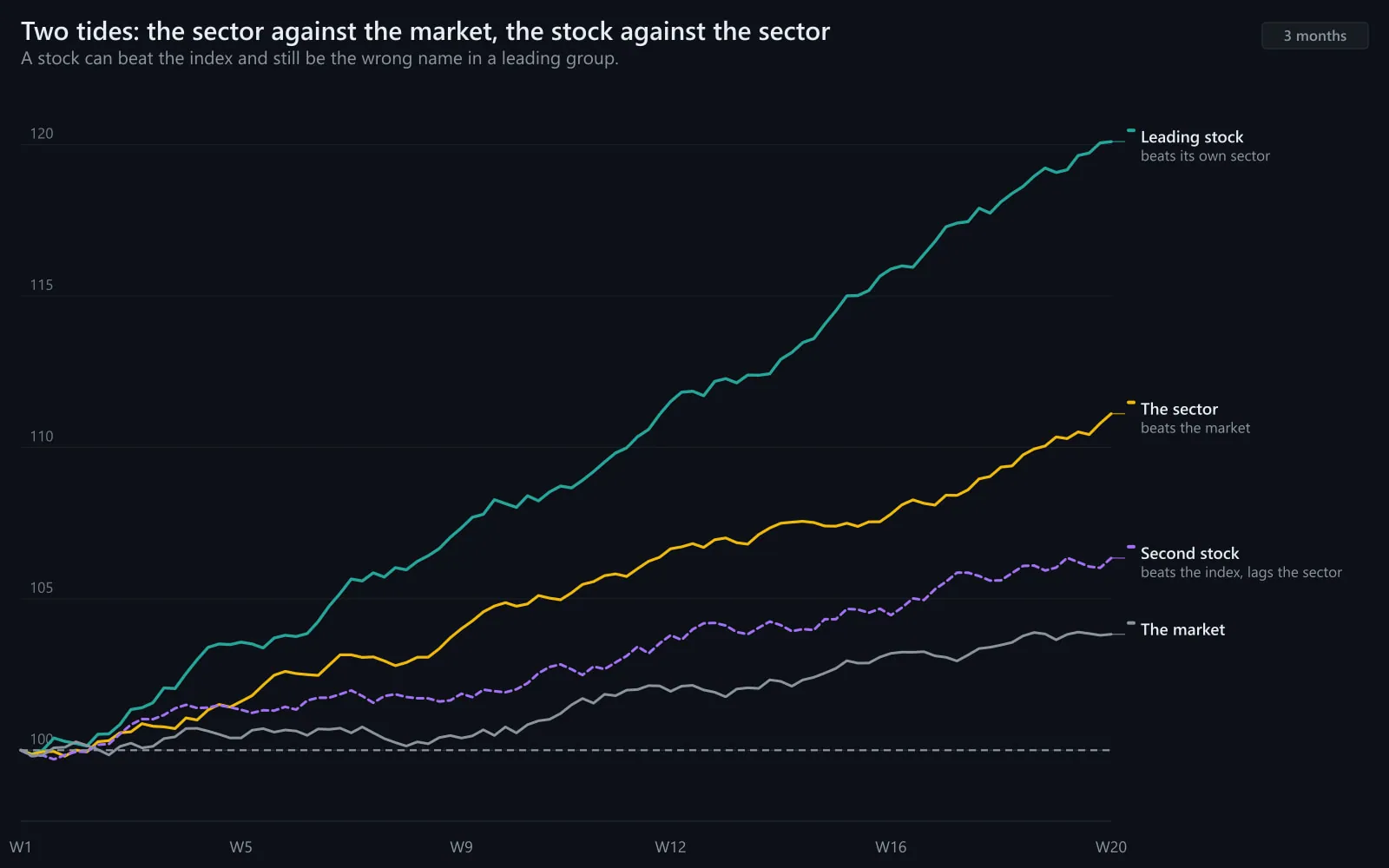 Relative Strength / WeaknessLesson 4Sector vs MarketRelative strength one level up.
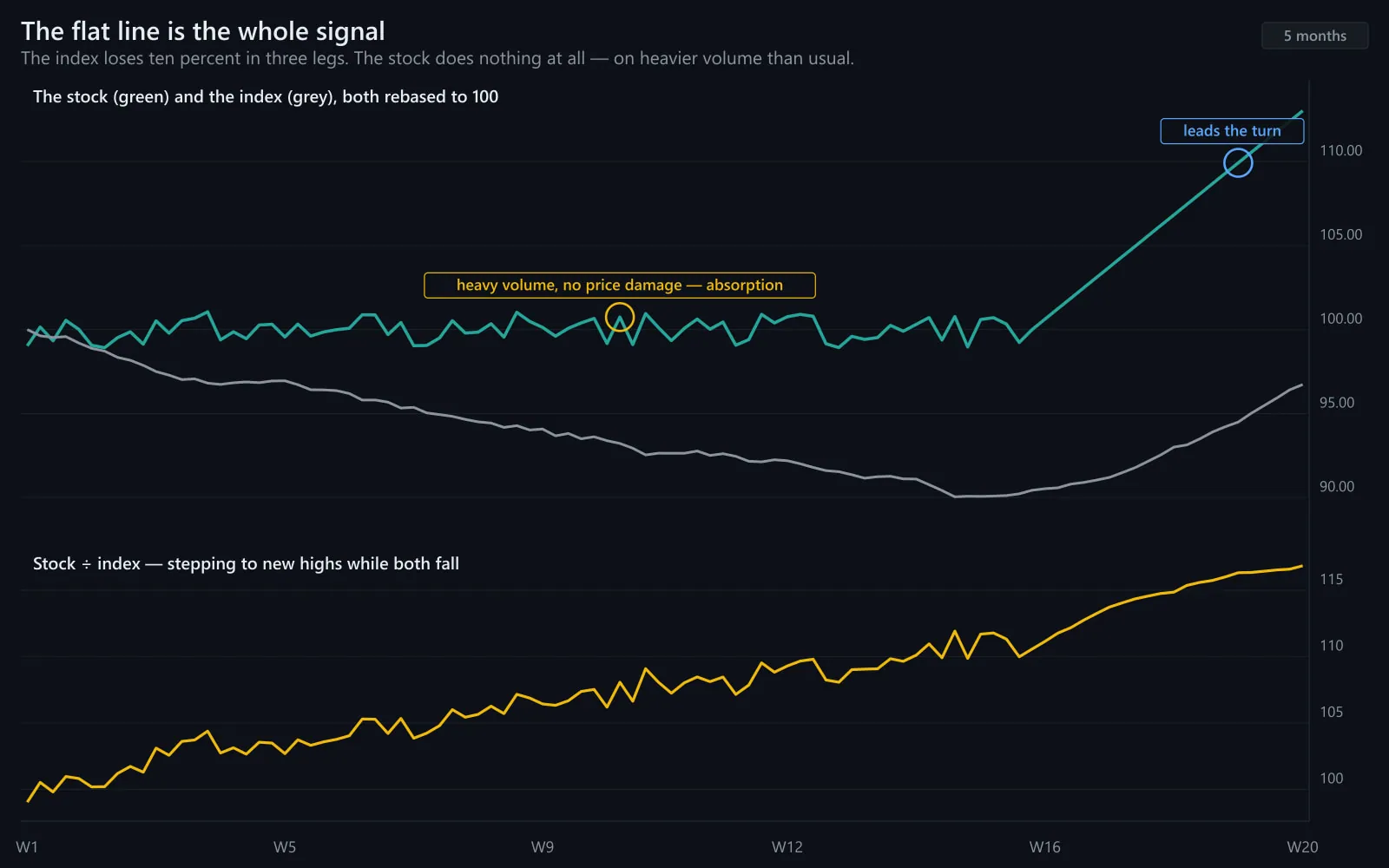 Relative Strength / WeaknessLesson 5Relative Strength During Market WeaknessThe names that refuse to go down.
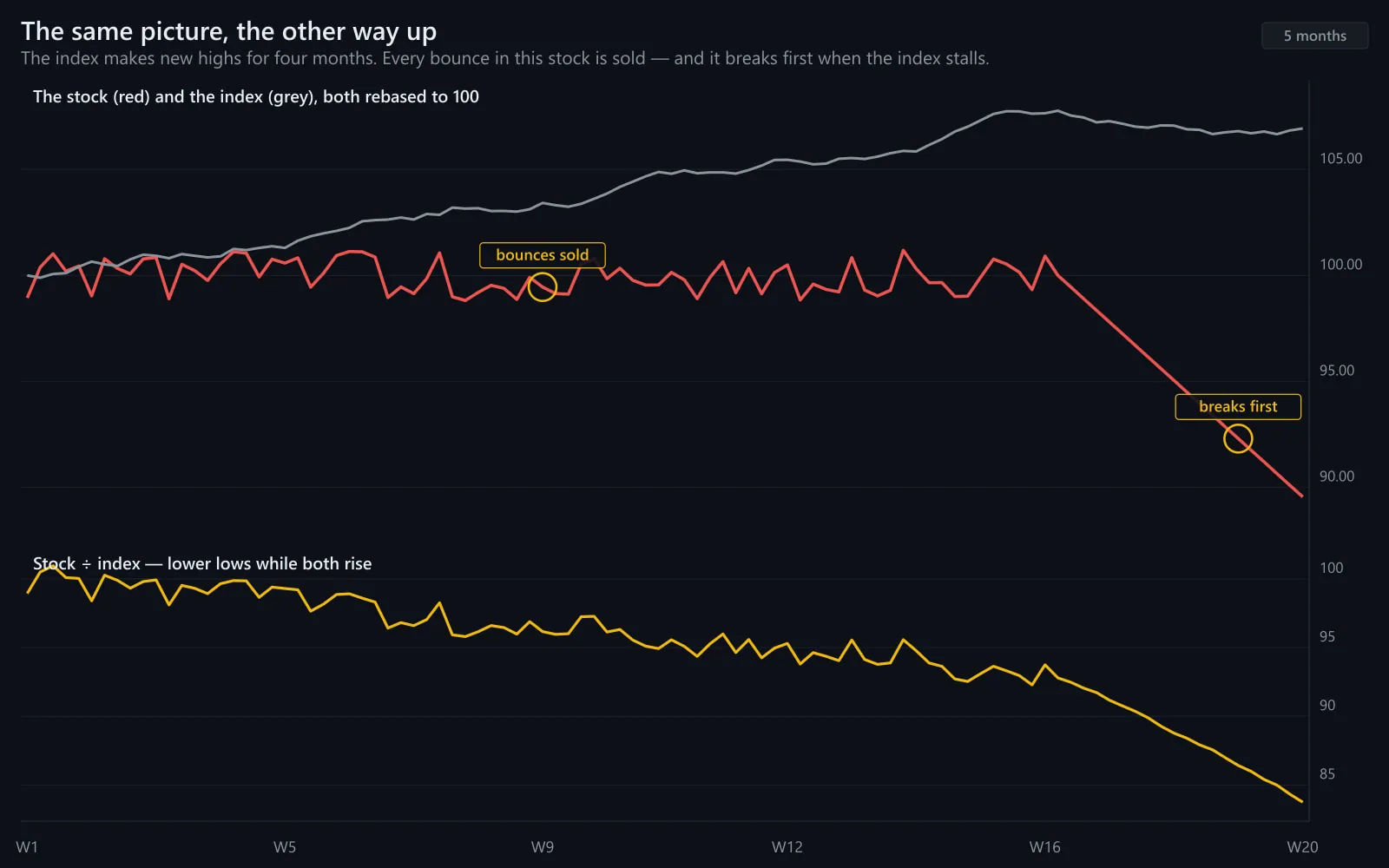 Relative Strength / WeaknessLesson 6Relative Weakness During RalliesThe names that can't get up.
 Relative Strength / WeaknessLesson 7How Traders Use Relative Strength as ContextNot a signal — a filter.
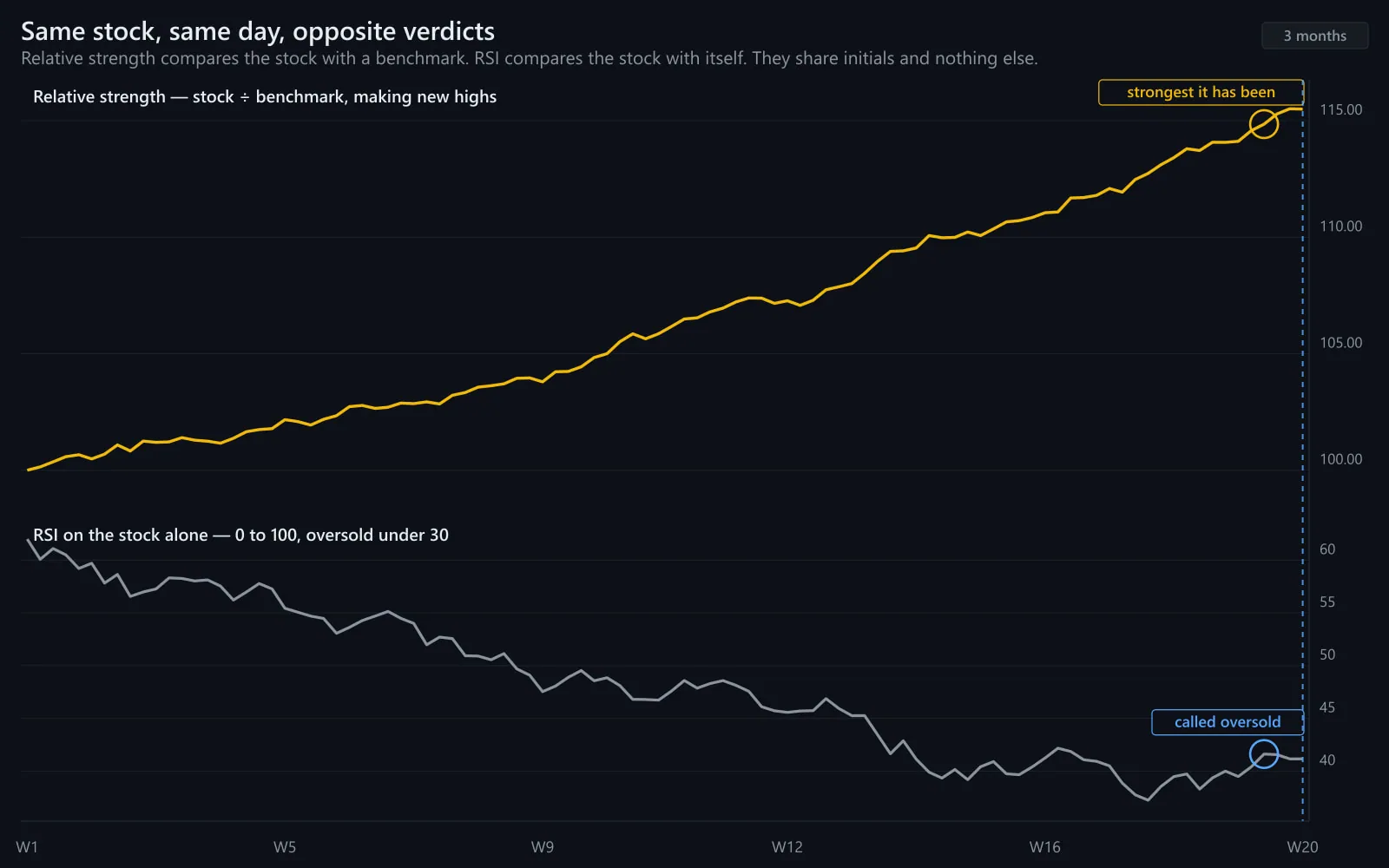 Relative Strength / WeaknessLesson 8Why Relative Strength Is Not RSITwo things with the same initials and nothing else in common.