
Understand what the market is actually doing.
Sectors, trading context, indexes and volatility — written by the academy, taught from zero, and free to read.
Start reading
Library
- 01Sector Intelligence11
- 02Trading Context21
- 03Market Overview22
- 04Major Indexes & ETFs8
- Technology
- Financials
- Energy
- Industrials
- Healthcare
- Consumer
- Communication Services
- Utilities
- Real Estate
- Sector Leadership / Lagging Sectors
Sector Intelligence · Lesson
Sector Leadership / Lagging Sectors
- Understand
- Read
- Interpret
- Apply
- Review

What you will learn to read
- S&P 500
- Nasdaq-100
- Dow Jones
- Russell 2000
- VIX
- Sector ETFs
- Market breadth
- VWAP
- Relative strength
- Trend days
- The open
- Leadership
Four places to start.
One way of reading the market.
The library's four subject areas, in reading order. Start with the one you already recognise.

Every lesson works the same way
So you always know where you are, and what to do next.
Understand
Understand it
What the thing is, why it exists and how it is measured — before a single chart.
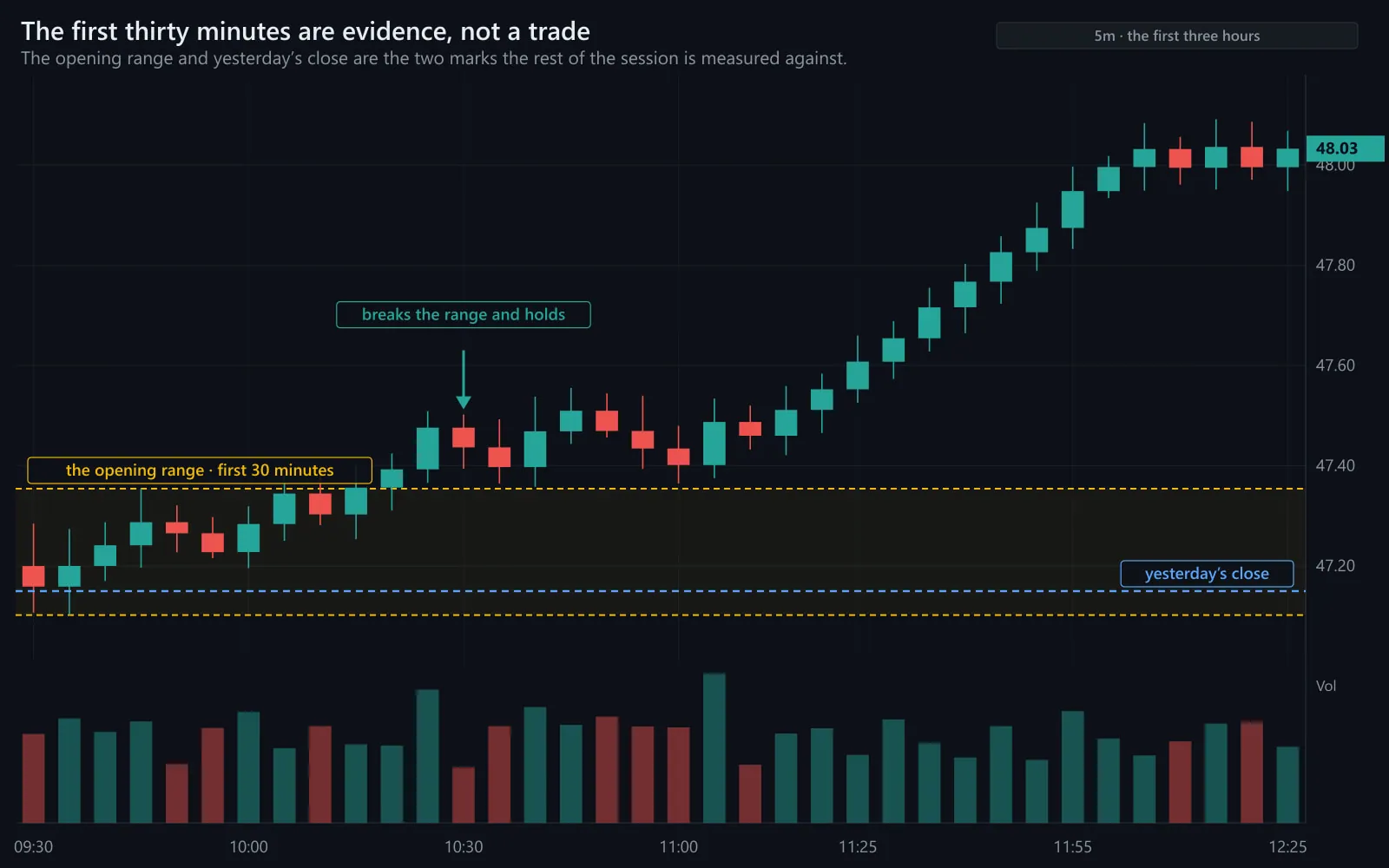
Read the chart
How professionals read it, what strength and weakness look like, and when the two disagree.
Interpret
Interpret it
What it means to an investor, to a trader — and what it cannot tell you.
Test yourself
What kind of day is this?
Test yourself
Read a chart on your own, check your answer, then take the takeaways with you.
Charts drawn to teach, never to predict


Every chart in the library is drawn from rules — a trend day, a range day, a failed breakout — so it shows exactly the behaviour the lesson is about, and nothing else.
None of it is live data, and none of it is a signal. Each chart says Illustrative on it.
See a chart lessonA catalyst is not a setup.
News can move a stock. It does not tell you where to act, or where you are wrong.
Illustrative, never a signal.
The charts teach behaviour. Nothing in the library tells you what to buy or sell.
Taught from zero.
Written for someone who has never opened a chart, by the academy that teaches the class.
From reading the market
to trading it
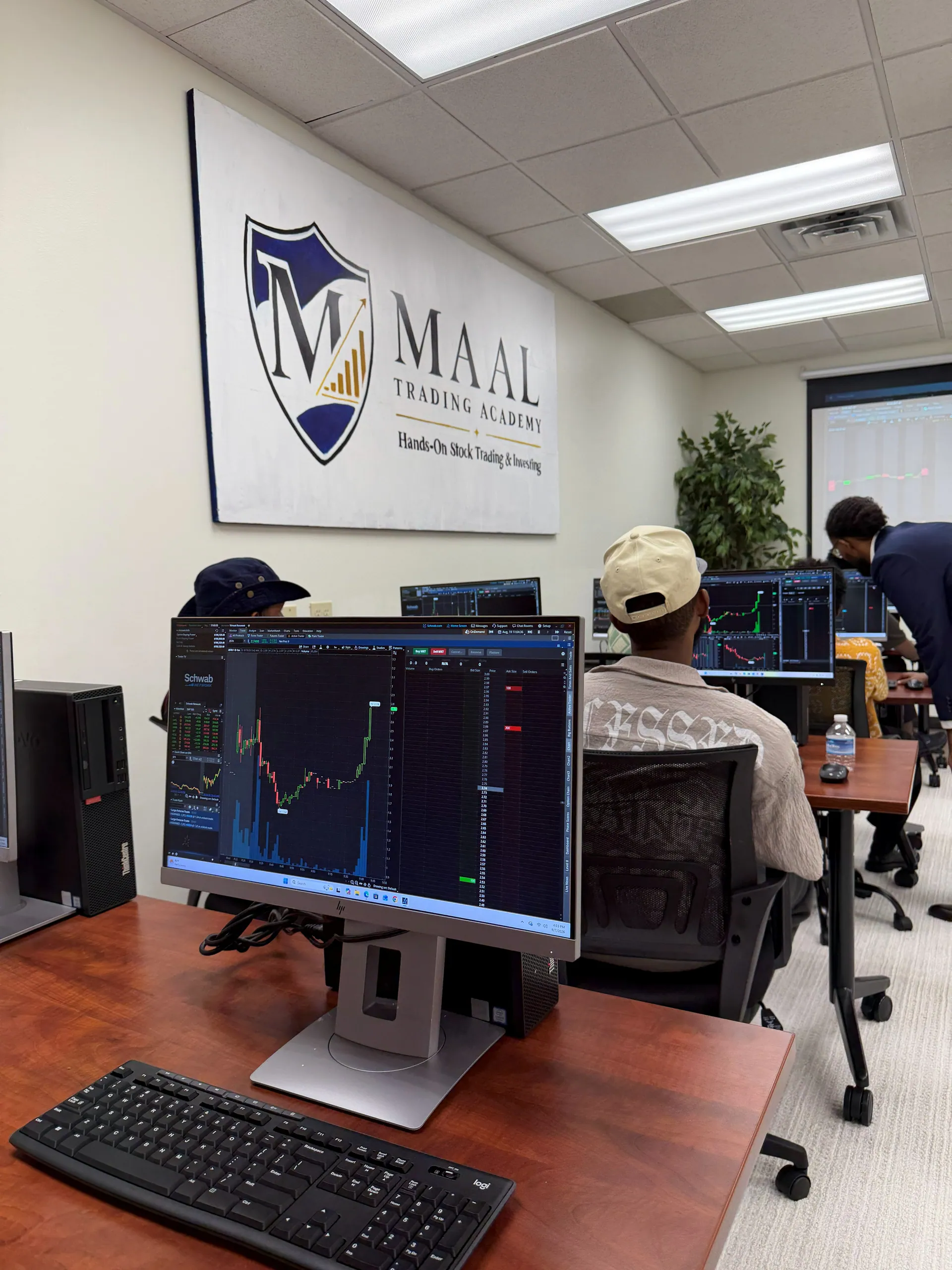
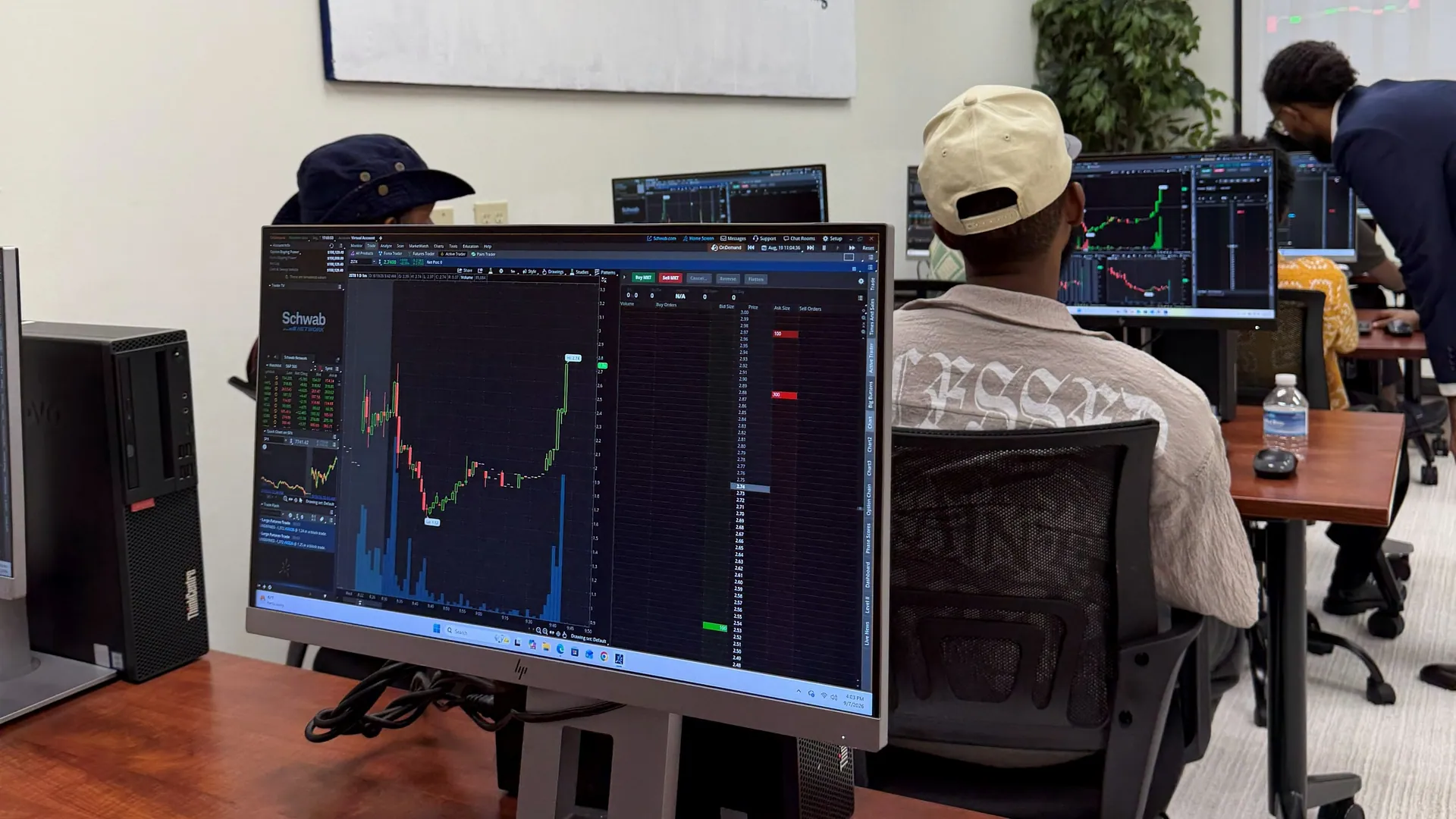
Learn it here. Practise it in the room, on your own station, with an instructor beside you.
Three ways
into the room
In person
Your own station in the classroom, the lesson on the big screen, and help when you raise your hand.
See class datesMost people meet the market through headlines and price alerts. The library starts one step earlier: what the market is, how it is measured, and how to tell what kind of day it is.
Every lesson is written by the academy and taught the same way in class, so what you read here is what you practise at your station.
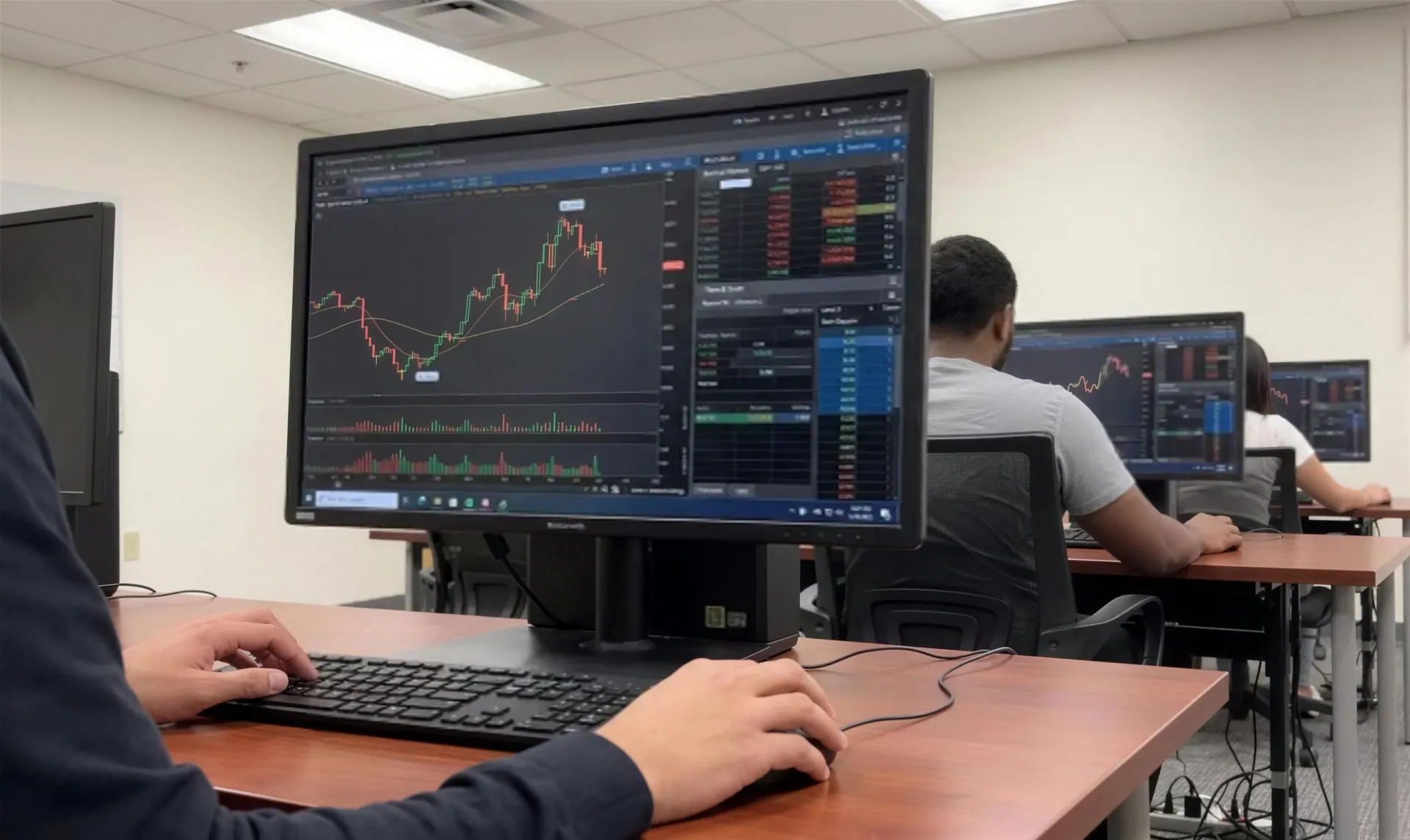
Start with a sector

Technology
Software, semiconductors, hardware — the sector that has set the market's tone for a decade.
Financials
Banks, insurers, exchanges and asset managers; the sector that feels interest rates first.

Energy
Oil, gas, refining and services; priced by a commodity the companies do not control.
Industrials
Railroads, machinery, aerospace, logistics — the economy's moving parts.

Healthcare
Pharma, devices, insurers and hospitals; defensive with a biotech edge.

Consumer
Discretionary and staples: what people want versus what people need.

Communication Services
Platforms, media, telecom — advertising and attention as businesses.

Utilities
Regulated electricity and gas; slow, indebted, and a barometer of rates and fear.

Real Estate
REITs: property as a listed income stream, sensitive to rates and occupancy.

Materials
Chemicals, metals, mining, packaging — early in the supply chain.
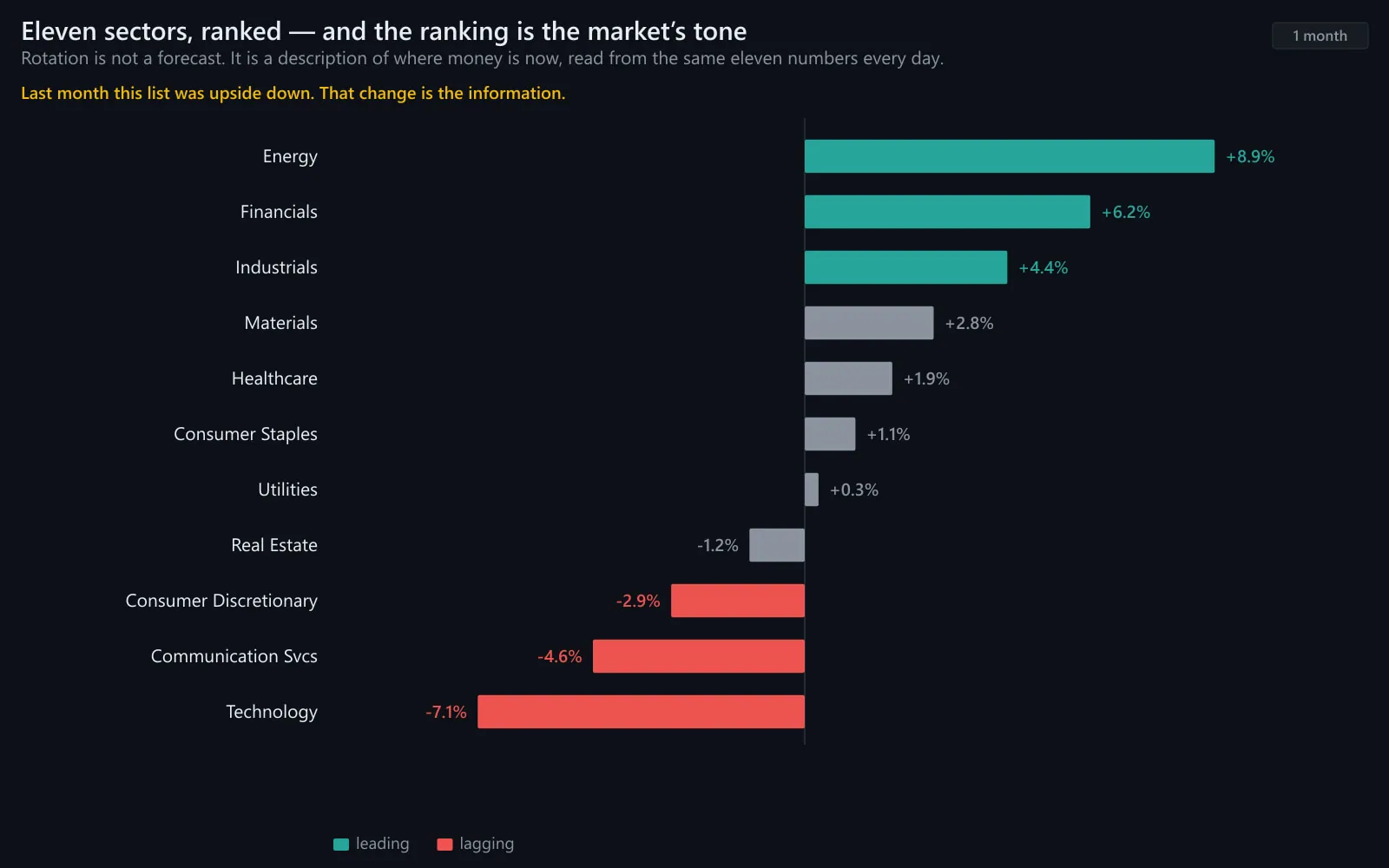
Sector Leadership / Lagging Sectors
Reading rotation across the eleven sectors to understand the market's tone.
The whole library. Every lesson, in reading order.
01Sector Intelligence
- Technology
- Financials
- Energy
- Industrials
- Healthcare
- Consumer
- Communication Services
- Utilities
- Real Estate
- Materials
- Sector Leadership / Lagging Sectors
02Trading Context
- Opening Conditions
- Trend Day vs Range Day
- What a Trend Day Looks Like
- What a Range Day Looks Like
- Opening Clues
- VWAP Behaviour
- Breadth Behaviour
- Volume Behaviour
- Failed Breakout Behaviour
- Why Strategy Changes With Condition
- Key Market Levels
- Relative Strength / Weakness
- Stock vs SPY
- Stock vs QQQ
- Sector vs Market
- Relative Strength During Market Weakness
- Relative Weakness During Rallies
- How Traders Use Relative Strength as Context
- Why Relative Strength Is Not RSI
- Correlation with QQQ / SPY
- Moving With or Against the Market
03Market Overview
- Major Indexes
- Market Breadth
- Volatility
- Historical Volatility
- Implied Volatility
- The VIX
- Volatility Expansion
- Volatility Contraction
- Volatility Around Earnings
- Volatility and Position Sizing
- Volatility vs Volume
- Leadership / Weakness
- Sector Leadership
- Industry Leadership
- Large-Cap Leadership
- Small-Cap Participation
- Breadth Confirmation
- Leadership Rotation
- Defensive Leadership
- Growth Leadership
- Risk-On vs Risk-Off Tone
- What Is Driving the Session
Understand it here. Practise it in class.
62 free lessons today, and a classroom when you are ready.